
• NEW! LOWEST RATES EVER -- SUPPORT THE SHOW AND ENJOY THE VERY BEST PREMIUM PARACAST EXPERIENCE! Welcome to The Paracast+, 11 years young! For a low subscription fee, you can download the ad-free version of The Paracast and the exclusive, member-only, After The Paracast bonus podcast, featuring color commentary, exclusive interviews, the continuation of interviews that began on the main episode of The Paracast. We also offer lifetime memberships! Flash! Take advantage of our lowest rates ever! Act now! It's easier than ever to susbcribe! You can sign up right here!

    Subscribe to The Paracast Newsletter!

Any coders out there?

Free episodes:

Ron Collins

Curiously Confused
I was wondering if any of our forum participants are coders and if so in what capacity?

I own a software company and have programmed in too many languages to recount. I am largely out of practice these days to be called more than a specification writer and a general pain in the butt to my programming staff.

I ask because I would like to form a group to help apply some programming techniques to several UFO sighting cases. If you are interested and have some expertise, let me know!
 
Hi Ron,

Yeah, I'm a software developer, been doing it for 17+ years.
Last 10 years mostly been doing C#/ASP.NET + SQL Server. Did Java before that.
I'm curious how you'd apply programming techniques to sightings. Do you mean creating a sighting db or something?
 
Hi Ron,

Yeah, I'm a software developer, been doing it for 17+ years.
Last 10 years mostly been doing C#/ASP.NET + SQL Server. Did Java before that.
I'm curious how you'd apply programming techniques to sightings. Do you mean creating a sighting db or something?

Sorry that I just now saw this.

I am working on constructing a probability matrix that is parameter driven. Here is a link that describes what I have in mind.

The Paracast Community Forums

If you are interested in helping, I would certainly welcome it. If so please PM me.
 
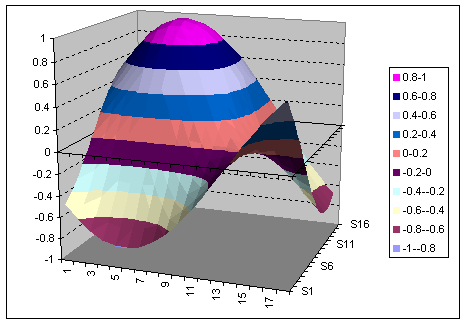
Um ... I think you can do x,y,z, graphing with Excel ...


surface2.gif


Excel is pretty amazing when you get good at it.

Also when you say "probability matrix" ... probability of what ... reliability ... cccurrence ( predictive ) ?

j.r.
 
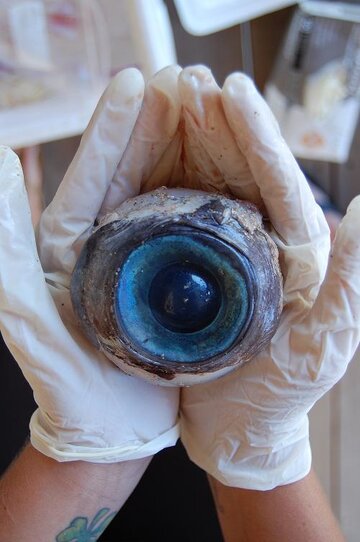
Um ... I think you can do x,y,z, graphing with Excel ...


eyeball.jpg


Excel is pretty amazing when you get good at it.

Also when you say "probability matrix" ... probability of what ... reliability ... cccurrence ( predictive ) ?

j.r.

Flight Characteristics. For instance, speed, ft/min ascent/descent, altitude variation measurement over time, etc. The basic idea is to provide a certain degree of tolerance to the observed phenomenon. Then measure that tolerance to see if there is a high or low probability of abnormal flight characteristics.

The observer might say that the objects altitude was about 1000 ft. and that it was approximately 1/4 mile away. The program would take that data and extrapolate a matrix around that position. Each point in the matrix might be 100 feet in horizontal separation extending 1/2 mile in each direction and 50 feet in vertical separation extending 500 feet above and below the position.

The object might be traveling across the observers point of view on a due east heading and making this transit in 10-15 seconds. The user would select a new position and the same matrix parameters would be applied. Then the two sets would be measured using a time range of 10 to 15 seconds. The results would be tallied and plotted on a graph. The graph would have ranges pre-calculated for different known GA, Commercial, and Military flight characteristics. Any measurement outside of these ranges would indicate the object having whatever degree of anomalousness.

Theoretically, an investigator might enter in this data and get a good idea if they were dealing with something that had a high probability of being anomalous or if it fits well within currently known aircraft tolerances. Then, depending on the other aspects of the case, it could help obtain a better classification of the sighting. Possibly even weeding out reports of misidentified craft or at least downgrading the the reports status. This is all in an attempt to look at better data sets for analyzing data. The technique could be used for a bunch of older cases as well helping to reclassify some of those to more accurately represent the true detail.
 
I was wondering if any of our forum participants are coders and if so in what capacity?

I own a software company and have programmed in too many languages to recount. I am largely out of practice these days to be called more than a specification writer and a general pain in the butt to my programming staff.

I ask because I would like to form a group to help apply some programming techniques to several UFO sighting cases. If you are interested and have some expertise, let me know!

Old fashioned (30 + years) business IBM Cobol coder. Of little use to you.
 
Old fashioned (30 + years) business IBM Cobol coder. Of little use to you.

There is nothing wrong with cobol. :) I have a legacy application used for complex calculations that is written in Cobol using a builder language called Flexgen. You cant beat Cobol for that kind of calculation based business logic. I have competitors that have written a newer component with Java's EJB methodologies and our object oriented Cobol still outperforms it. But, I understand what your saying.
 
Back
Top